
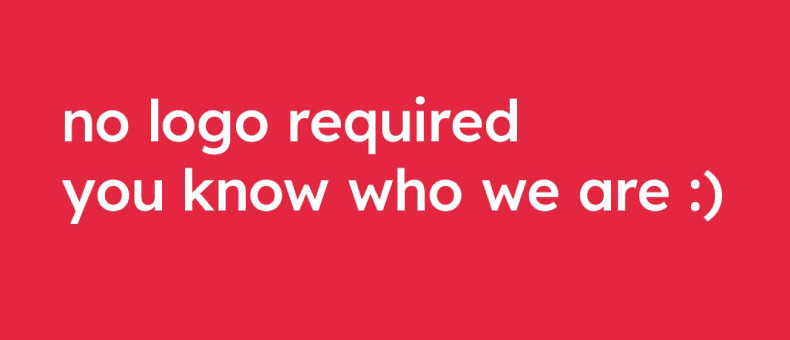
Zomato did it again!
Zomato released a print ad that split the internet: “That’s a Zomato ad” vs. “I thought it was X”, where X is any brand with prominent use of red in marketing communications.
Here’s the detail nobody discussing this has mentioned: the ad ran in exactly one edition of one newspaper – The Times of India, Delhi. Not the national edition. Not The Hindu, Hindustan Times, or any regional paper. One city, one morning.
That single fact should reframe the entire debate, because everyone arguing about whether the ad “worked” is measuring the wrong thing.
For context, Zomato does national ads in multiple newspapers and multiple editions of The Times of India quite often.
And this ad has the hallmark (in terms of tone, design, use of red, the white text, font, etc.) of Zomato’s usual cockiness that grates some people.
The waste-of-money argument has a data problem
The most common take: this was an expensive front-page buy that most readers couldn’t decode, therefore wasted money. The evidence offered is always the same: a scroll of posts on LinkedIn, X, and Instagram from people saying they didn’t recognize the brand, or guessed Airtel, Kotak, HSBC, Coca-Cola, or BookMyShow before finding out.
That evidence has a built-in blind spot. Someone who saw the ad, immediately thought “Zomato”, and turned the page has zero reason to post about it. There’s no story there. The people who post are, almost by definition, the ones who were confused, annoyed, or delighted to finally crack the misdirected clue – the use of “bank statements” (as against using, for instance, ‘stomach’) and the number 18. Silence isn’t in the sample. You cannot read comprehension rates off a feed that only captures the confused and the vocal.
That doesn’t prove the ad “worked”. It proves the “most people didn’t get it” claim is unfalsifiable in either direction – nobody actually knows the real split, and treating a scroll of screenshots as a survey is the same move regardless of which side makes it.
Why one edition of a single newspaper, not fourteen across multiple newspapers
If Zomato’s goal was mass recall (that is, make all of India register “Zomato turned 18”) this was a strange way to do it, surely. A national brand with something to say to the whole country runs the ad nationally, in every major paper, in regional languages. Zomato ran it in Delhi. Once. In English.
That’s not the media plan of a brand trying to maximize reach. It’s the media plan of a brand trying to seed a debate in one city with a single print ad and let it travel online. This is exactly what happened. Every version of this discussion online eventually resolves the same way: someone points out that Zomato was the only major brand turning 18 that day, a fact one Google search away, and the mystery collapses.
The ad didn’t need everyone to get it from the page. It needed enough people to not get it immediately, post about it, and get corrected in public. That correction is the actual media event, and it costs nothing beyond the original single edition print buy.
Was this also a mildly cynical trick, using confused readers as unpaid distribution? Sure. Marketing built on manufactured confusion for algorithmic reach isn’t a new playbook, and it’s fair to find it grating. But grating and ineffective are different critiques, and most of the pile-on has been making the second claim with evidence that only supports the first.
There is, of course, a silent cohort who saw the red page in that single Delhi edition, guessed wrong (Airtel, Kotak, HSBC, redBus, or Coca-Cola), and simply turned the page. That outcome isn’t ideal in isolation, but it was an expected and acceptable byproduct of the strategy. The ad was never engineered for flawless, universal print comprehension across a heterogeneous newspaper audience. It was engineered for just enough ambiguity in one targeted market to generate the online correction cascade that actually carried the message. A perfectly obvious version would have generated near-zero earned media. But this version traded some wasted or misattributed impressions for disproportionate conversation at minimal incremental cost. Given Zomato’s heavily digital/app-first user base (the people who actually see the brand’s red in context of orders and bank statements daily), the print seeding functioned more as a spark for the platform where their core audience lives and amplifies. The silent misattributors represent the acceptable inefficiency in any earned-media play that relies on mystery rather than brute repetition.
The logo objection undercuts itself
“Why be so arrogant? Just put the logo on it” is a common criticism I encountered in the replies section to my LinkedIn post.
Play that out: a self-congratulatory “we turned 18” ad, logo included, is one of the most skippable print ad formats that exists. Nobody’s milestone-anniversary ad has ever gone viral. Strip the logo and add one taunt (“No logo required. You know who we are ?) and you’ve turned a non-event into a puzzle. The ambiguity is not a design failure that many people are piling on. It is the entire mechanism.
An ad engineered to be instantly obvious would have generated the one outcome Zomato clearly didn’t want: nothing.
Same logic answers the “why pay influencers to explain it” complaint. That’s not lack of confidence at all. It’s a clever backstop. Let the ad work on whoever decodes it unaided and nudge the rest via influencers and an app notification. Why leave 100% comprehension to chance when a cheap second wave gets you there anyway?
The mechanism’s reach extended beyond consumer correction threads. Peer brands chose to play along publicly, turning color overlap from a vulnerability into collaborative wit. For instance, Kotak Mahindra Bank didn’t ignore or complain about the red overlap. They publicly leaned in with a witty reply along the lines of: “Bank statements, food cravings… Red connects us both. Happy 18th Birthday, Zomato”.
When other brands voluntarily extend your cultural moment, you’ve created something worth engaging with rather than merely consuming or ignoring.
This also surfaces the meta layer that appeared in reactions: the ad triggered not just “who is this?” but a broader, higher-quality conversation about brand color ownership and distinctiveness in India (where red is shared by several large players). That’s sophisticated brand-equity discourse usually confined to marketing conferences, not public feeds sparked by a food app’s birthday notice.
On a larger level, there’s something poetically fitting about a brand turning 18 choosing this approach. At 18, humans are wired for daring, risk-taking, and not taking themselves too seriously… pushing boundaries with a mix of confidence and mischief, while still operating within some guardrails. Zomato’s ad does exactly that! It’s a controlled experiment in one city edition rather than a safe, national, logo-forward declaration. It dares to have fun, manufacture a puzzle, and invite the audience into the joke instead of lecturing them with corporate earnestness. Marketing purists may call it arrogant or wasteful. But in doing so, the brand signals it has earned the right to play, precisely because it has spent 18 years relentlessly building the equity (that signature red, that relentlessly irreverent tone) that makes the play land for so many. The milestone became memorable not despite the cheek, but precisely because of it.
What this was actually for
Zomato turning 18 is a functional data point, relevant to employees and investors, irrelevant to everyone else. There was no product news, no standout offer (the app just showed me a routine Rs.180-off banner tied to the 18th birthday), no reason for the public to care. On its own, the milestone wasn’t going to make anyone feel more attached to the brand.
The ad manufactured relevance the milestone didn’t have on its own. How? Not through a simple informational communication, but through a puzzle designed to travel. Whether that’s clever or try-hard is a matter of taste. But judging it as a reach-and-recall buy, then “proving” it failed using a handful of confused/critiquing social media posts as evidence, is answering a question Zomato was never trying to solve.