
Not just Dabur Red. Colgate recommends* Amway’s toothpaste brand Glister too!
How about that fine print *, you ask? Colgate India officially, in its website, recommends that we buy a toothpaste with the IDA (Indian Dental Association) Seal. How many toothpastes from Colgate have this seal? You’d be very, very surprised to know the answer! Read on!
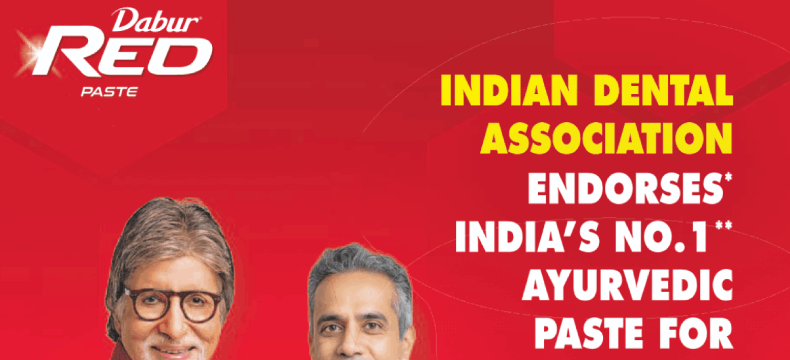
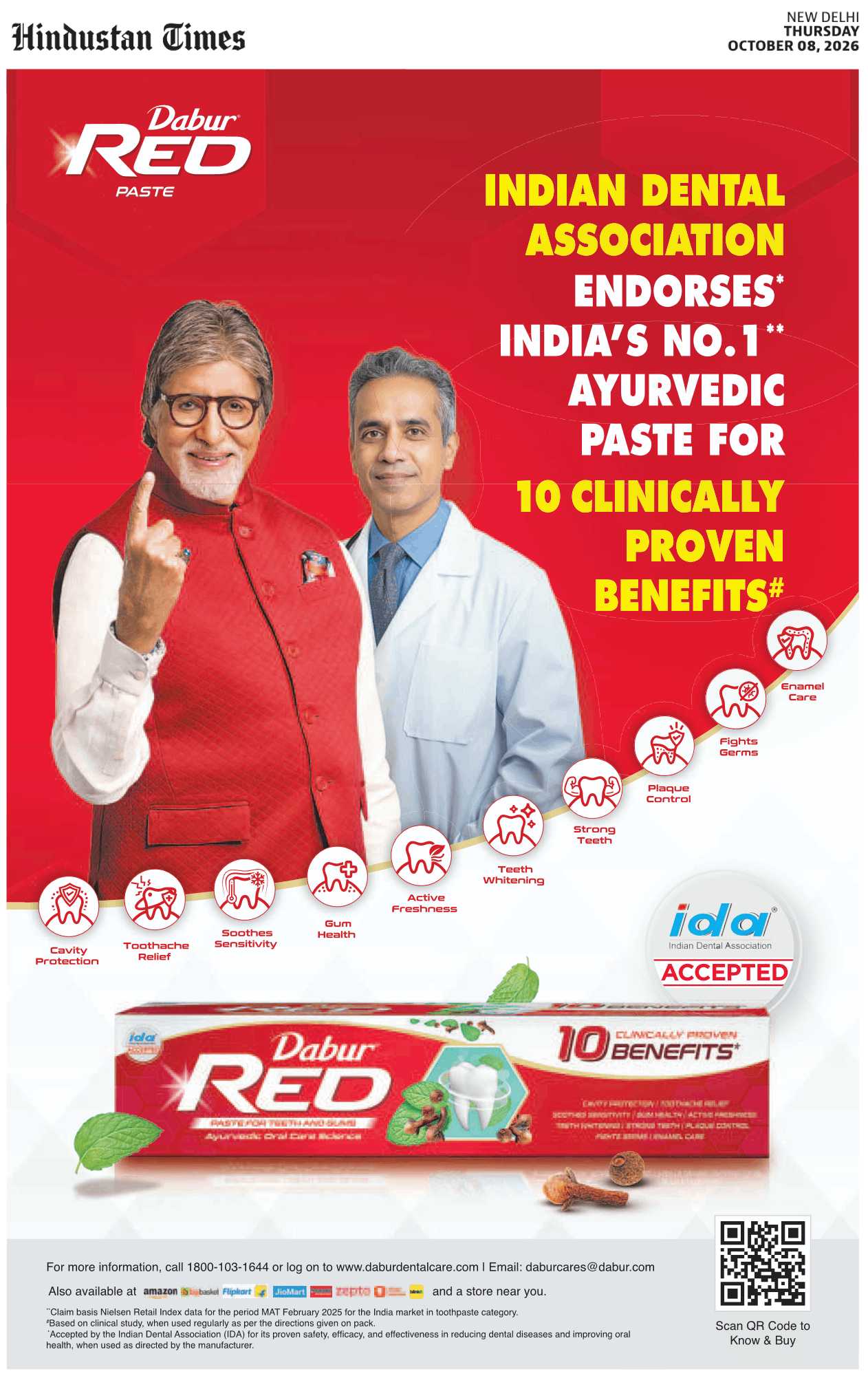
Let me start with the recent print ad by Dabur Red. Last week, Dabur released a front-page ad in the Hindustan Times where it proudly proclaimed that Dabur Red toothpaste variant (India’s No.1 Ayurvedic toothpaste, as per Dabur) has received the endorsement of Indian Dental Association (IDA). The ‘IDA Accepted’ seal is now on the pack of Dabur Red.
You may wonder… isn’t Colgate the brand that relentlessly harps on ‘The toothpaste most recommended by dentists’ in its ads? Hold on to that thought 🙂
Now, you need to know the background to Dabur Red getting an IDA seal. Why? Because Dabur Red (and all of Dabur’s toothpaste variants) are famously non-fluoridated. All of Dabur’s toothpastes do not contain fluoride.
In fact, Dabur made a song and dance of this point, in a campaign targeting all fluoridated toothpastes, just last year, on World Oral Health Day (March 20, 2025)!
Notice the ‘IDA Accepted’ seal proudly displayed near the Dabur Red product pack (and not next to Meswak product pack)!
A note from Dabur India to the stock exchanges, in February 2025, makes a specific point about this! It says,
“One good news I want to share with you guys is Dabur Red toothpaste is the first Ayurvedic toothpaste to have been accredited by IDA, which is Indian Dental Association, which only used to have accredited fluoride-based toothpaste. For the first time they have given accreditation to a non-fluoride-based toothpaste. So, now we can get into dentist endorsements also and as we continue the efforts of doctor advocacy, this will also get leveraged, and we will reach out to more number of dentists and try to spread this across.”
Not just this. Dabur’s Annual Report 2024-25 has a note to this effect too.
“Dabur Red Toothpaste became the first homegrown oral care brand to receive the prestigious Seal of Acceptance from the Indian Dental Association (IDA), a recognition that highlights the brand’s commitment to delivering safe and effective oral care. The IDA Seal of Acceptance is granted based on a comprehensive scientific evaluation that confirms Dabur Red Paste’s adherence to safety and efficacy standards. Clinical evidence has shown that Dabur Red Paste helps combat various dental problems, including toothache, bleeding gums, bad breath, yellowing teeth, cavities, plaque, and germ buildup, when used as directed.”
The point right next to the one above is very relevant:
“Our toothpastes are formulated without fluoride, offering a safe and natural alternative for individuals seeking fluoride-free oral care. This makes them an ideal choice for anyone looking to avoid synthetic additives while still maintaining effective dental hygiene.”
Why is this relevant? Because of what Indian Dental Association says on its own website.
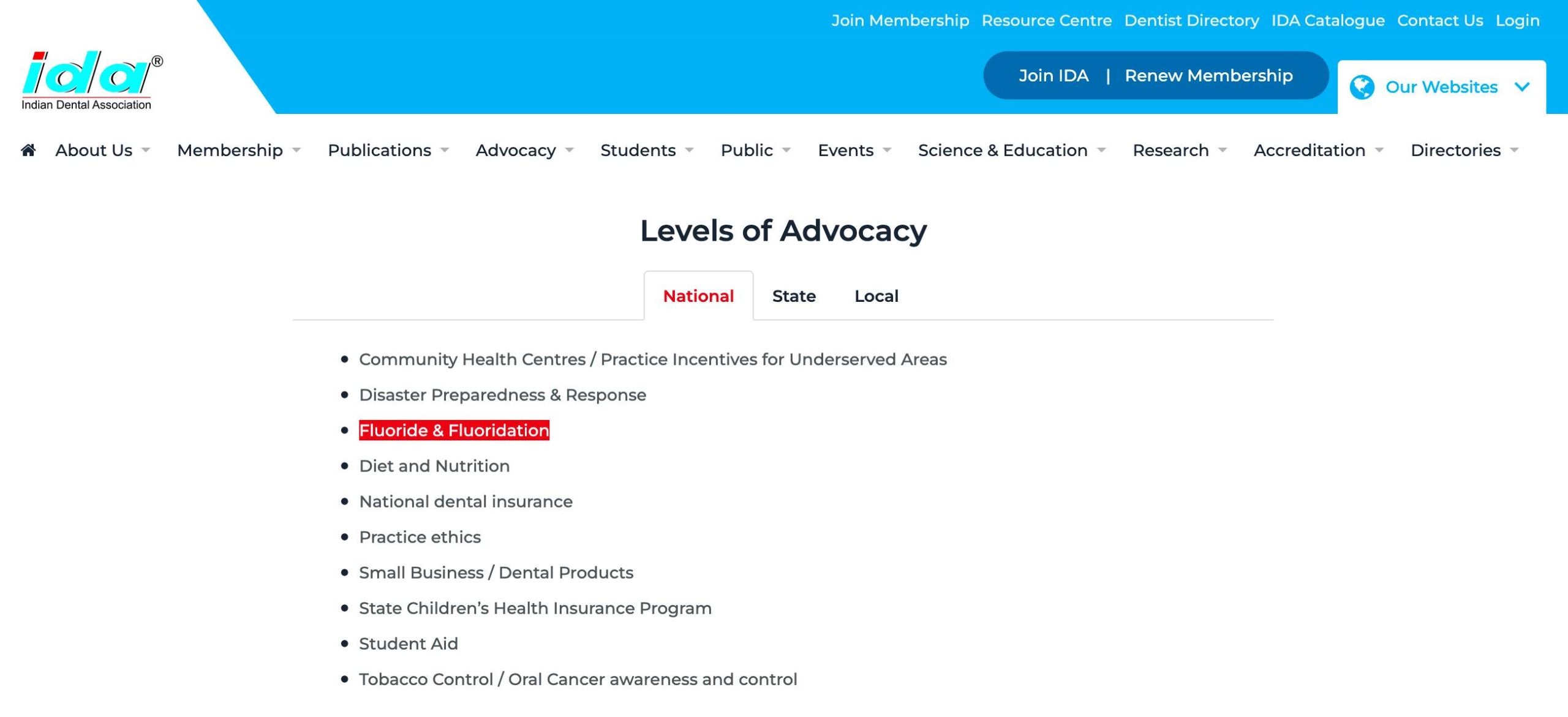
Under ‘advocacy’, IDA says that ‘Fluoride & Fluoridation‘ is a national level agenda!
In another dedicated page about fluoride, it says,
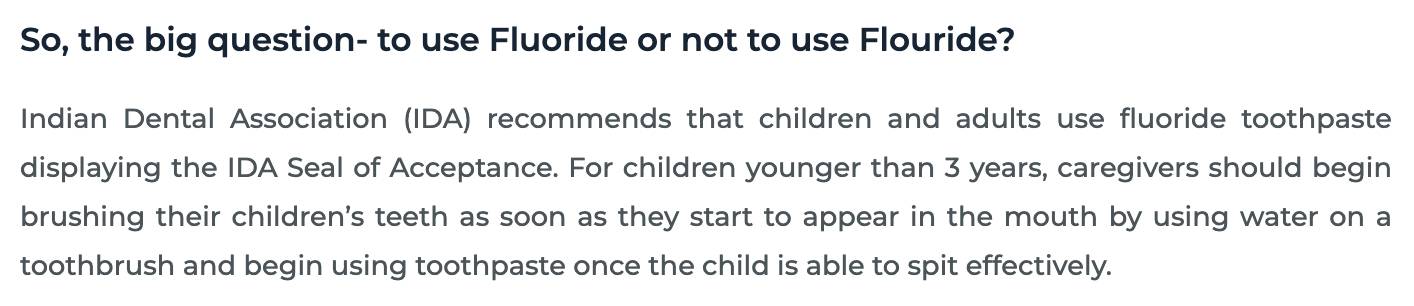
“Indian Dental Association (IDA) recommends that children and adults use fluoride toothpaste displaying the IDA Seal of Acceptance. For children younger than 3 years, caregivers should begin brushing their children’s teeth as soon as they start to appear in the mouth by using water on a toothbrush and begin using toothpaste once the child is able to spit effectively.”
The same page also talks about Flourosis (a developmental disturbance of enamel which occurs during enamel forming, caused by systemic overexposure to fluoride during the first six years of life, when the enamel of the crowns of permanent teeth is formed) in India. Under flourosis in India, the page says, “1 lakh+ villages, with more than 10 million people, stand to face disability and other serious health problems because of high Fluoride in their water across 22 States and 200+ districts of India. Throughout India flourosis is essentially Hydroflourosis except in parts of Gujarat and U.P. where industrial flourosis is also seen”.
The page goes on to list maps of many Indian states and pinpoints fluoride affected areas, much like what Dabur claimed in its Dabur Red anti-fluoride ad!
Yet another page, about how the Seal can be used in advertising and packaging, says, “the Seal Statement on an accepted toothpaste with fluoride would read: “The IDA Council on Scientific Affairs’ acceptance of (product name) is based on its finding that the product is effective in helping to prevent and reduce tooth decay, when used as directed”!
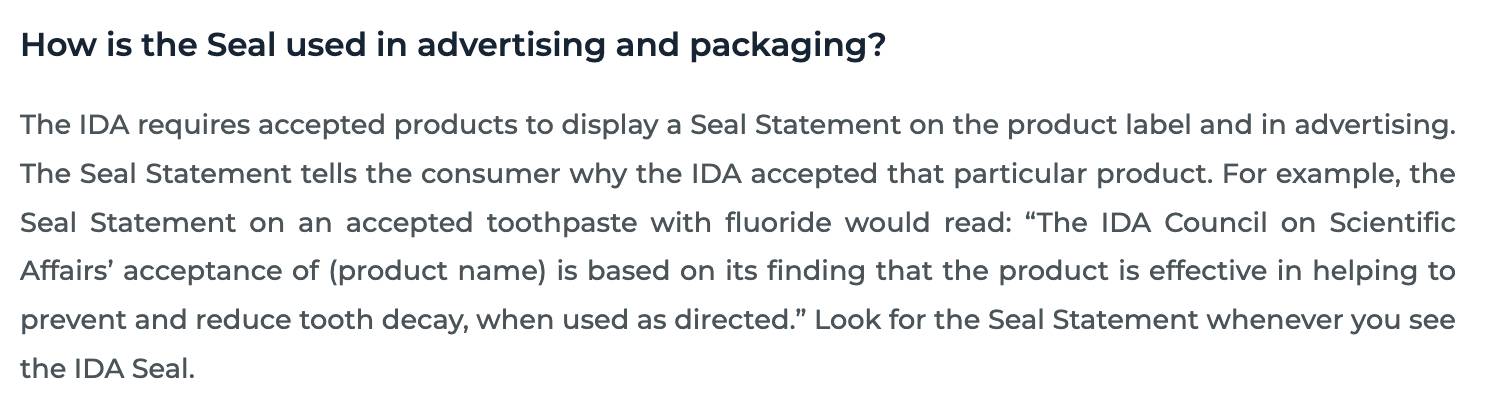
The indicative text itself leads with ‘toothpaste with fluoride’ as if a non-fluoridated toothpaste receiving the IDA seal seems improbable!
Has IDA changed its view on fluoridated toothpastes in a vocal and visible manner to enable “accepting” a non-fluoridated toothpaste for the first time under the IDA Seal program? Not that I can find out from the IDA website.
Consequently, Colgate went to court against the Dabur for the March 20 (2025) anti-fluoride ad! In the Colgate–Dabur case, the Delhi High Court record notes that Dabur’s 2025 advertisements were challenged for portraying fluoride-containing toothpaste as a class as harmful. The Court required Dabur to modify the wording, including changing “excessive fluoride” to “swallowing of excessive fluoride” and add ‘in kids’ before ‘health problems’.
The Court has not yet finally adjudicated the underlying scientific/advertising dispute. The January 2026 order specifically says the issue of disparagement of fluoride remains pending.
This perhaps explains why Dabur did not run the anti-fluoride ad this year for World Oral Health Day. And why it chose to highlight its ‘IDA Accepted’ seal after more than one-and-a-half years… after jubilantly sharing it with the stock exchanges and talking about it in the company annual report. Because they were legally in limbo about fluoride-related comments. And the IDA ad does not have a single word on fluoride, as expected.
Now, let me come to the smoking gun. About ‘Colgate endorsing Dabur Red’ 🙂
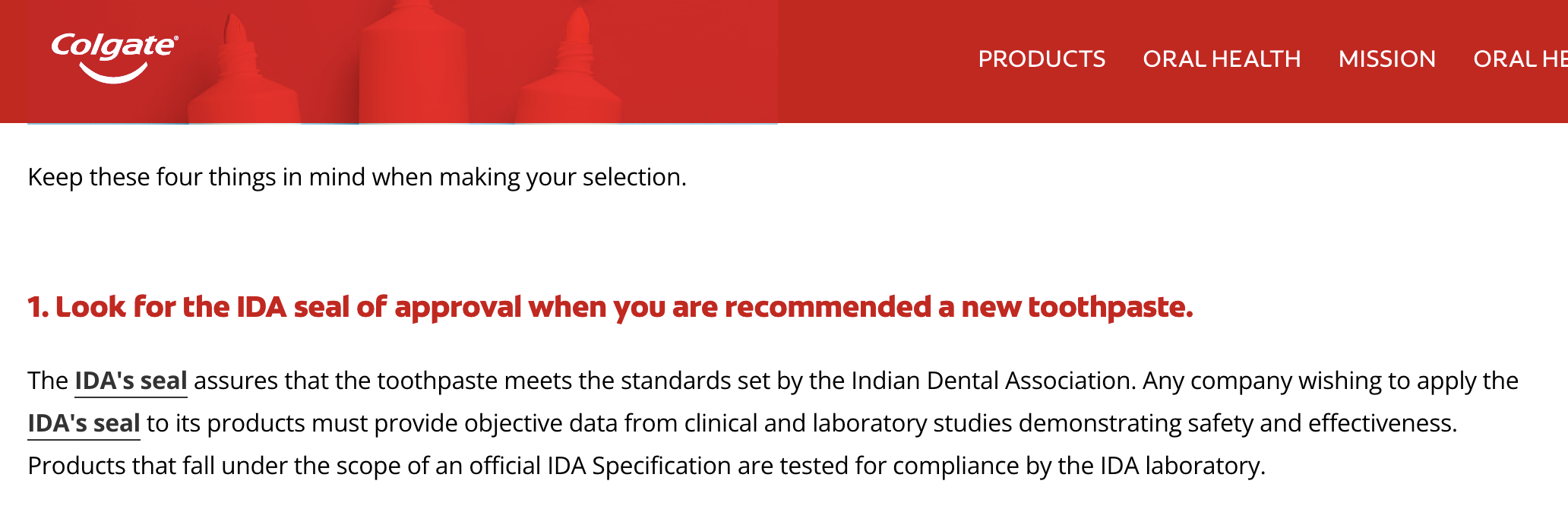
Here’s Colgate India web page says:
“Look for the IDA seal of approval when you are recommended a new toothpaste.
The IDA’s seal assures that the toothpaste meets the standards set by the Indian Dental Association. Any company wishing to apply the IDA’s seal to its products must provide objective data from clinical and laboratory studies demonstrating safety and effectiveness. Products that fall under the scope of an official IDA Specification are tested for compliance by the IDA laboratory.”
In another page too:
“You may consider choosing an over-the-counter toothpaste with the Indian Dental Association (IDA) Seal of Acceptance.”

Now, you may be thinking that Colgate has a ton of toothpaste variants with IDA acceptance, right? Here is that list, on IDA’s own website.
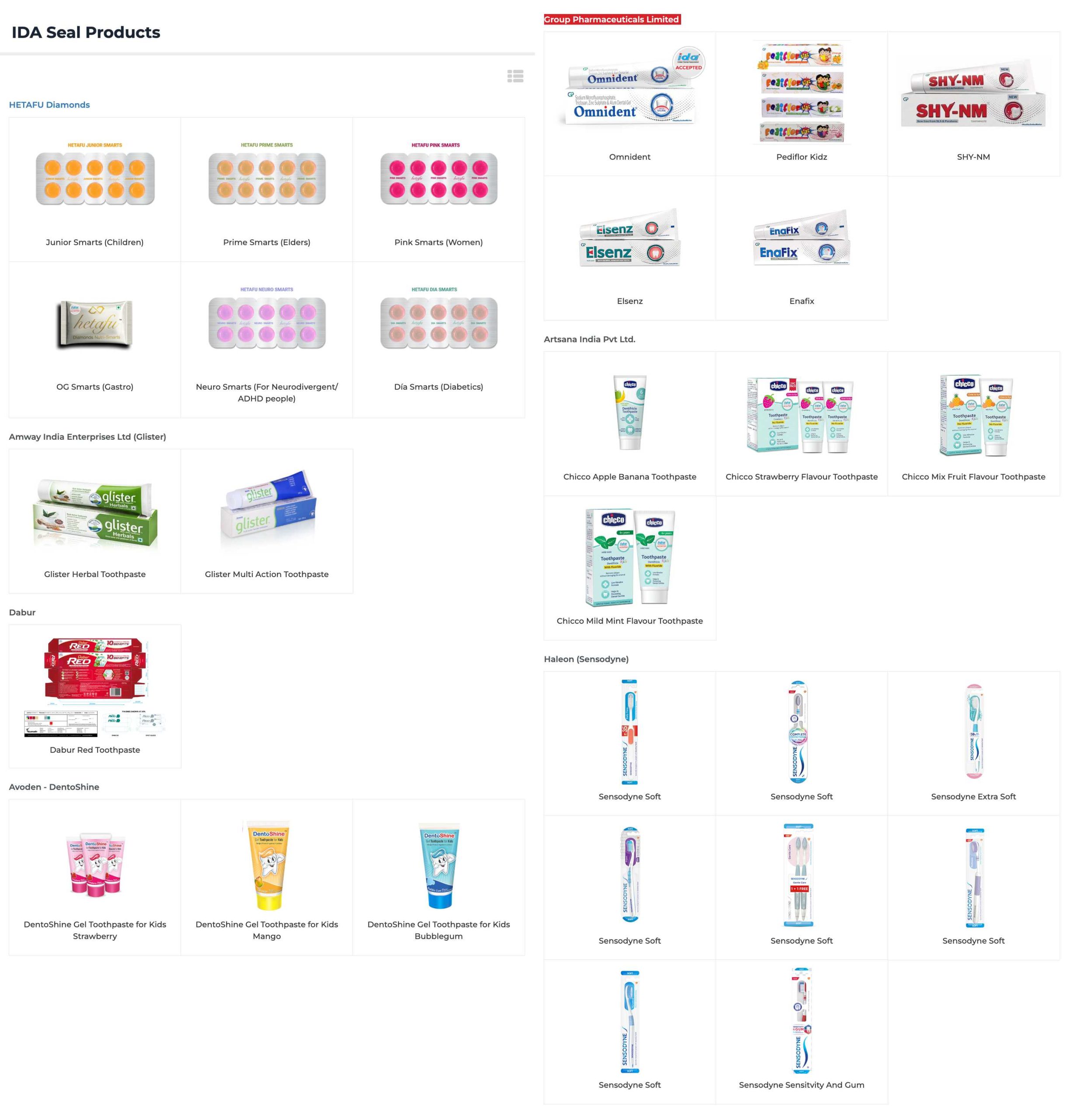
There are 15 toothpastes listed, and none are from Colgate! There are variants from Amway, Avoden, Group Pharmaceuticals Limited, Chicco, and of course, one variant from Dabur – Dabur Red.
So, if Colgate India website recommends people to pick up an IDA approved toothpaste AND Colgate India does not have any IDA approved toothpaste, would that amount to Colgate India recommending that we buy a toothpaste variant from Dabur (or Amway; the rest of the IDA accepted variants are kids toothpastes)?
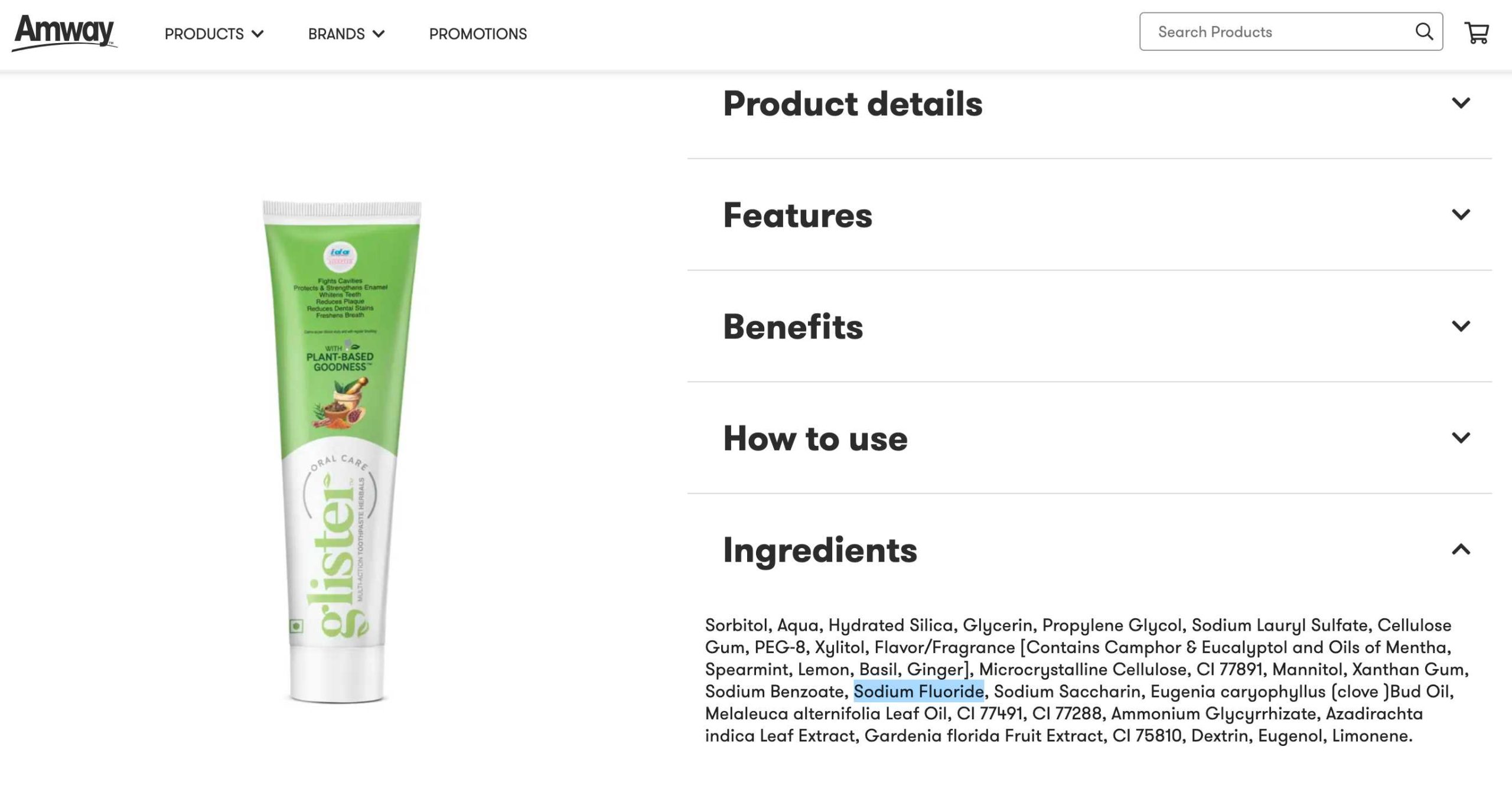
Oh, one more thing – one of the 2 variants from Amway is a ‘herbal’ toothpaste, much like Dabur Red, and it does contain fluoride!
So, what is going on here? This is my assessment, after going through this complex web of evidence on IDA seal, fluoridated toothpastes, and Dabur’s anti-fluoride campaign.
One – Colgate used to have ‘IDA Accepted’ seal for certain variants. But now, it does not have a single toothpaste with that seal.
The classic Colgate Dental Cream did have the seal at least 24 years ago. Here’s proof: “Colgate Dental Cream is the only family-priced toothpaste to have received the coveted Seal of Acceptance from the Indian Dental Association (IDA)”.
Colgate Sensitive too had the seal at some point, but now, it doesn’t seem to be.
Why not? Because the IDA Seal is awarded for a period of 3 years. Post that, companies need to reapply.
So, it’s quite possible that Colgate does not see any value in going for the IDA Seal anymore even though they work with IDA on a lot of other engagements. As recently as April 2026, a media release from Colgate says,
“Colgate, in partnership with the Indian Dental Association (IDA), has onboarded 63,000 Dentists, thereby enabling dentist access through one of the country’s largest consumer touchpoints: the Colgate pack. By scanning the QR code available on any Colgate Toothpaste pack, consumers can complete a brief assessment and receive a personalized Dental Screening Report. The platform then provides options of participating dentists in their pin code for a free consultation”.
But IDA Seal? Nope. Not one toothpaste from Colgate, at present, features in the IDA Seal list.
Colgate’s website continues to recommend the IDA Seal, even though no Colgate toothpaste appears in IDA’s current online directory. Whether this is an oversight, an outdated piece of consumer guidance, or a deliberate choice, the mismatch deserves an explanation.
Two – Indian Dental Association used to advocate fluoridated toothpastes for good oral health, and continues to do so.
Yet IDA has accepted Dabur Red, a fluoride-free toothpaste, while its public-facing guidance continues to recommend fluoride toothpaste carrying the IDA Seal of Acceptance. Has IDA changed its acceptance criteria, or does it distinguish between a product-specific seal and its general recommendation on fluoride? Its public-facing material does not adequately explain how these positions fit together.
Three – Dabur has managed the impossible – to turn IDA!
The seal is a commercial program with fees and a defined renewal period. That makes transparency about its evaluation criteria and product-specific findings all the more important.
What I do not understand is why Dabur did not highlight this element – the first non-fluoridated toothpaste in India to get the IDA Seal – in its March 2025 ad even though it had all the elements in place! Instead, it went anti-fluoride in that ad, and is not focusing only on the IDA Seal part. Both together makes a far more powerful statement against Colgate. But Dabur seems to have missed that trick, and now cannot go gung-ho on the anti-fluoride sentiment because it is under litigation.
So, what are the action items now?
From Colgate: Your Indian website tells consumers to look for the IDA Seal of Acceptance. Yet your toothpaste variants do not appear in IDA’s current online directory, while Dabur Red does. Is this consumer guidance still current? If it is, explain why. If it isn’t, update it.
For IDA: You recommend fluoride toothpaste carrying your seal, but Dabur Red (a fluoride-free toothpaste) also carries it. What exactly did you evaluate and accept? What does the seal certify in this case, and how does that acceptance fit with your public recommendation on fluoride? Consumers shouldn’t have to piece together your position from separate web pages.
For Dabur: The IDA seal is a significant endorsement to communicate. But the more interesting story is not simply that Dabur Red has received it. It’s that a fluoride-free toothpaste has received the seal of an association whose public guidance recommends fluoride toothpaste. Explain what that acceptance means, and let the evidence (not mere insinuation) make the case.